The Ultimate Guide to Crafting AI Prompts for Ecommerce Success

Introduction to AI Prompts
In the fast-paced world of ecommerce, creating compelling content at scale is a major challenge. This guide is designed to help you create your own prompts to generate product description content that is not only engaging but also optimized for search engines. By mastering ai prompts, you can unlock the full potential of chatgpt and other large language models. We will explore a system for generating quality product descriptions that resonate with customers and drive sales.
Our goal is to provide you with the knowledge to build a robust prompt engineering strategy. This involves more than just asking an ai tool to write something; it’s about providing precise instructions to achieve the perfect result. We have extensively researched various ai models and tested different tools to identify the most effective chatgpt prompts for product content. This article will serve as your comprehensive resource, offering examples and actionable advice.
The importance of a well-crafted prompt cannot be overstated. A generic request will yield a generic response. However, when you provide the right prompt, the AI can generate content that sounds like it was written by a human expert who understands your brand and your customers. This guide will help you bridge the gap between AI capabilities and your business goals.
Understanding the Power of ChatGPT Prompts
Generative AI has transformed content creation. For ecommerce businesses, it enables bulk generation of descriptions without sacrificing quality—if you use the right chatgpt prompts. A strong prompt acts as a blueprint, helping the AI understand product features, target audience, and tone. Without it, output is generic and ineffective.
Prompt engineering is the new copywriting: instead of writing final text, you write the instructions that generate it. This skill is vital for marketers, shopify owners, and content managers. With well-structured requests, you can use chatgpt to brainstorm, refine messaging, and anticipate customer questions.
Tools like an ai product description generator work best when you build a formula. Specificity matters: a “Bulleted” or “Single Paragraph” layout controls structure, while quality levels like “Good” or “Excellent” shape vocabulary and flow. Master these components, and you’ll consistently produce quality product descriptions.
The Role of AI Models in Content Creation
Different ai models have different strengths. Some are better at creative writing, while others excel at technical documentation. Understanding these differences is crucial for selecting the right tool for your needs. For ecommerce, you need a model that can balance creativity with factual accuracy. You need it to be persuasive without being misleading.
When you provide feedback to these models, they learn and adapt. This is why iterative prompting is so powerful. You can start with a basic prompt, see the output, and then refine your instructions based on what you see. This process helps you find the right prompt that consistently delivers the results you want.
The Core Components of a Product Description Prompt
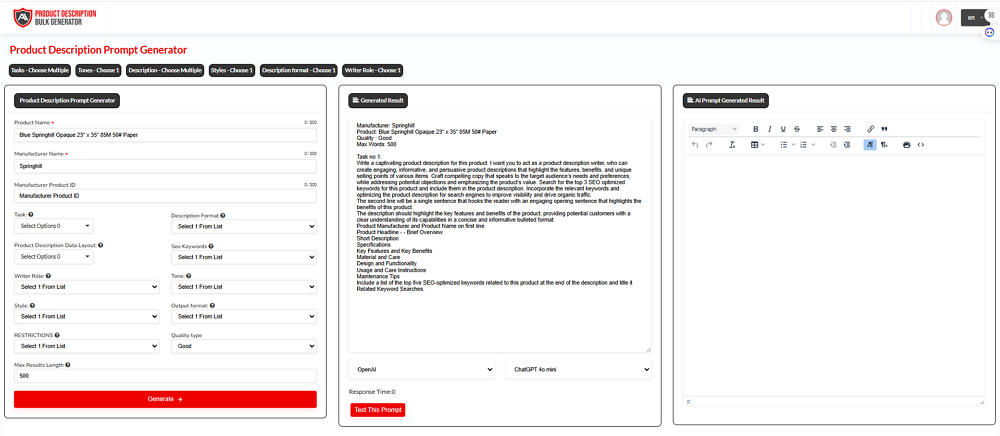
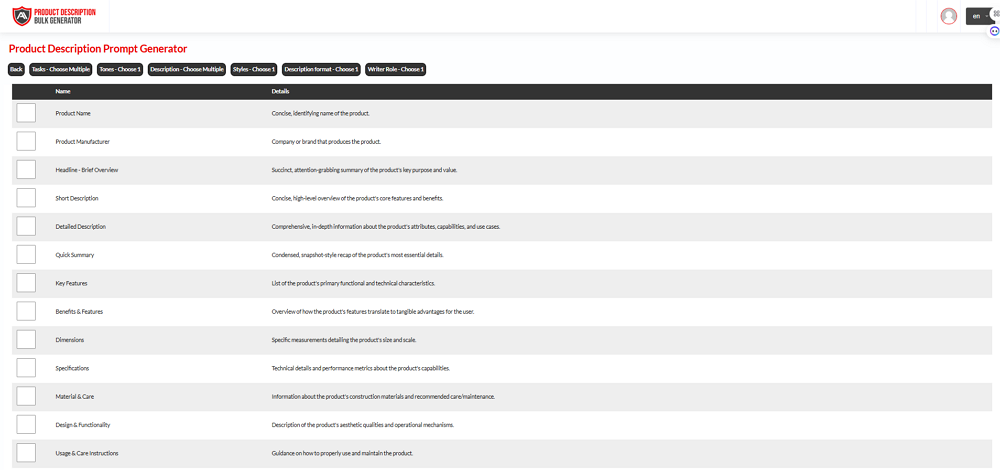
To get the best results from an ai product description generator, you need to provide a structured prompt. This structure ensures the AI understands exactly what is required. A high-quality prompt typically includes several key elements: the manufacturer, the product name, the desired layout format, the quality level, and a maximum word count. These components work together to constrain the AI, forcing it to generate a focused description rather than a rambling essay.
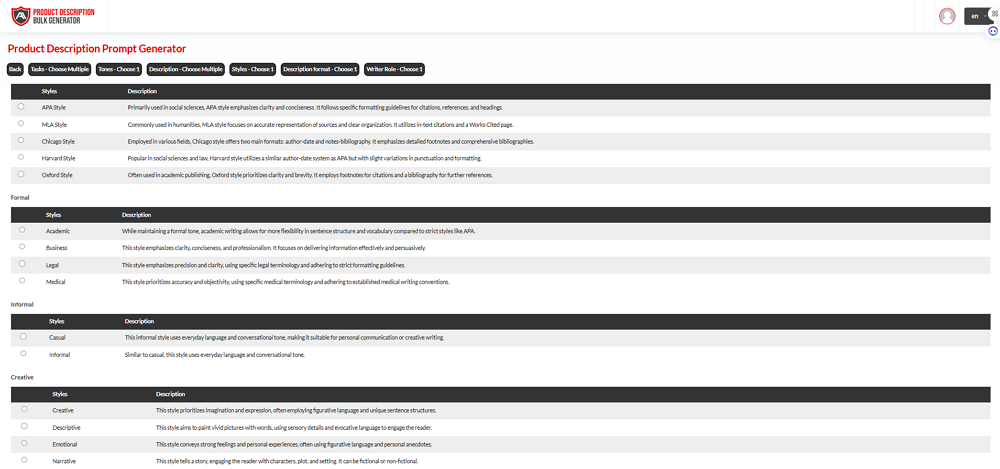
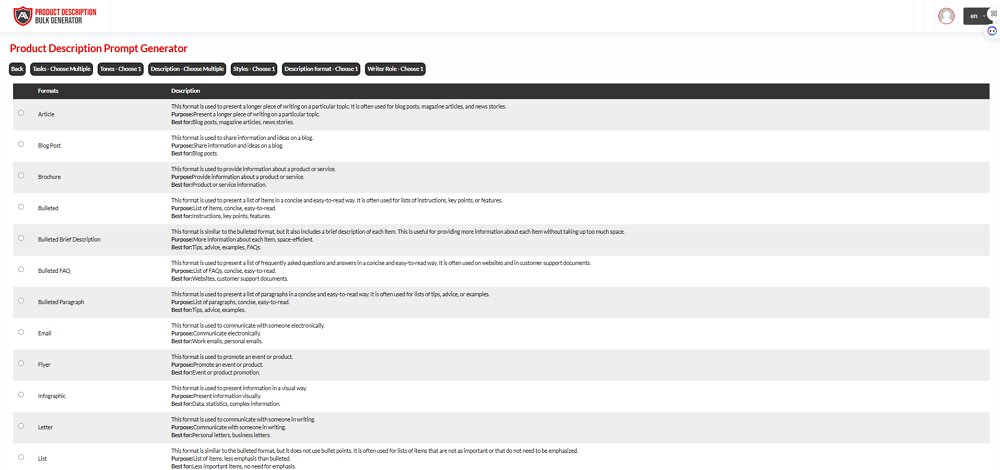
When you use tools for product descriptions, you are essentially building a formula. The more specific you are, the better the output. For example, specifying a layout format like “Bulleted” or “Single Paragraph” dictates the structure of the response. Setting a quality level like “Good” or “Excellent” influences the vocabulary and flow. By mastering these components, you can consistently generate quality product descriptions that meet your standards.
Defining Product Features and Specifications
Accurate information is the foundation of any good description. Your prompt must include product features and technical specs—especially for complex products. Selling paper? Specify size, weight, and brightness. Selling a beverage? Describe the flavor profile. The AI can’t invent these details; it relies on your data.
Detailed specs serve two purposes: they give the AI raw material and help it understand context. Knowing a paper is “50# cover stock” tells the AI it’s durable, letting it infer benefits like tear resistance. Providing this upfront is crucial for accurate, persuasive descriptions.
Incorporating keywords into your prompt also helps the AI understand SEO goals. Instruct it to weave them in naturally, ensuring the output is both readable and optimized for search engines. This dual focus on human readability and machine optimization is what makes prompt engineering so valuable.
Setting the Layout and Word Count
Structure is just as important as content. When you generate ai prompts, you should always specify the desired layout. Common formats include a single paragraph, a bulleted list, or a comprehensive article with headers. A bulleted list is great for scannability, while a single paragraph is good for a quick overview. For a shopify product page, you might want a mix of both, using headers to break up the text.
Word count is another critical constraint. Telling the AI to write “500 words” or “750 words” helps it determine how much detail to include. If you ask for a very long description without a limit, the AI might become repetitive. Conversely, a very short limit might result in a description that lacks necessary detail. Setting a max word count helps you control the length of the content for different platforms, such as a brief social media post versus a detailed blog entry.
Examples of AI Prompts for Product Descriptions
To help you get started, let’s look at some prompt examples. These examples demonstrate how to combine the components we discussed into a coherent instruction set for chatgpt. By studying these, you can adapt them to your own product lines. Remember, the goal is to provide clear, concise, and specific instructions to the AI.
Sample Prompt 1: Single Paragraph Focus
This prompt is designed for a concise, informative overview. It is ideal for product listings where space is limited but you still want to hit the key selling points.
Manufacturer: Springhill
Product: Blue Springhill Opaque 23″ x 35″ 85M 50# Paper
Layout Format: 1 Paragraph
Brief Description Quality: Good
Max Words: 500
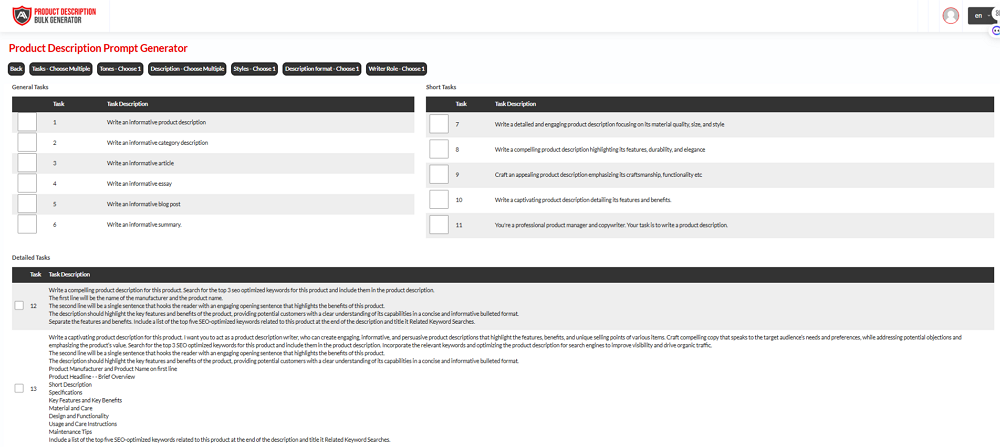
Task: Write an informative product description.
AI Output: Springhill’s Blue Springhill Opaque 23″ × 35″ 85M 50# Paper is a premium large-format stock engineered for maximum opacity and vibrant color reproduction. At a sturdy 50-pound basis weight, this sheet resists curling and tearing under heavy ink or marker applications, while its high-opacity 85M coating prevents show-through for crisp text and bold graphics every time. The ultra-smooth surface is optimized for offset, digital, and screen printing as well as pen, pencil, and brush work, making it ideal for posters, signage, architectural renderings, and craft projects. Acid-free and pH-neutral, this eco-friendly paper preserves artwork and plans without yellowing, and its consistent manufacturing tolerances ensure reliable performance sheet after sheet.
Sample Prompt 2: Bulleted and Headered Format
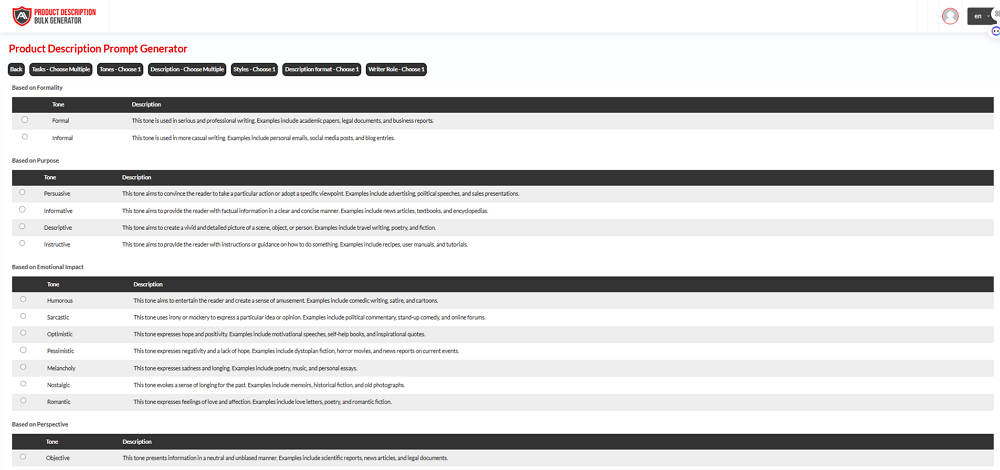
This prompt is perfect for ecommerce sites that want to highlight benefits and features clearly. It uses a conversational tone and a structured layout.
Manufacturer: Springhill
Product: Blue Springhill Opaque 23″ x 35″ 85M 50# Paper
Layout Format: Bulleted
Quality: Good
Max Words: 500
Task: Write a product description formatted with headers. Start with an introductory paragraph with a brief overview and product benefits. Use a ‘Features’ header and provide 3-5 bullet points. Use a ‘Specifications’ header and provide bullet points on technical specs. End with a ‘Benefits’ header and summarize main benefits. Use conversational language.
AI Output:
Introduction:
Looking to make your next poster, signage, or creative project pop? Springhill Blue Springhill Opaque 23″ x 35″ 85M 50# Paper delivers a rich, deep-blue backdrop with exceptional opacity and a silky-smooth surface that brings every design to life. Whether you’re printing high-impact graphics or sketching out architectural plans, this specialty stock combines durability, vibrancy, and archival quality for professional-grade results.
Features:
Vibrant deep-blue hue – enhances color contrast and draws the eye to your work
Superior opacity – high-opacity 85M coating prevents show-through, even under heavy ink
Ultra-smooth finish – optimized for digital, offset, and screen printing as well as hand-applied media
Broad media compatibility – perfect for pen, pencil, marker, brush, and inkjet applications
Archival‐grade composition – acid-free, pH-neutral stock that resists yellowing over time
Specifications:
Sheet size: 23″ × 35″ large format
Basis weight: 50 lb (50#) cover stock for a sturdy, tear-resistant feel
Brightness rating: 85 for accurate color reproduction and crisp contrast
Opacity rating: 85M high-opacity grade
Environmental credentials: fully recyclable, sourced from responsibly managed forests
Benefits:
Eye-catching presentations – the deep-blue canvas makes logos, text, and illustrations stand out
Reliable performance – consistent thickness and finish batch after batch
Versatile applications – from architectural renderings to retail displays
Long-term preservation – archival quality keeps documents pristine
Eco-friendly choice – recyclable and sustainably sourced
Sample Prompt 3: Comprehensive Article
For a blog post or a detailed landing page, you might need a longer piece. This prompt asks for a comprehensive, SEO-optimized article with specific sections.
Manufacturer: Springhill
Product: Blue Springhill Opaque 23″ x 35″ 85M 50# Paper
Task: Write a comprehensive SEO optimized product description article using 750 words. Layout with different sections. Include a product overview, key features, benefits, product specifications, installation guide, answers to common questions, and a conclusion.
AI Output:
Product Overview
Springhill’s Blue Springhill Opaque 23″ × 35″ 85M 50# Paper is a premium large format specialty paper designed for professionals and creatives who demand vibrant color, rock-solid opacity, and consistent performance. With its deep, saturated blue tone and high-opacity 85M coating, this sheet eliminates show-through and delivers crisp, eye-catching graphics every time. Weighing in at a sturdy 50-pound cover stock, it resists curling, tearing, and warping—even under heavy ink coverage. Whether you’re producing posters, signage, architectural renderings, or art portfolios, this acid-free, pH-neutral paper preserves your work for years.
Key Features
High-Opacity 85M Coating: Ensures no show-through, so text and images remain bold.
Robust 50# Cover Stock: Provides stiffness and tear resistance for large format printing.
Ultra-Smooth Finish: Delivers consistent ink laydown and razor-sharp detail.
Large Format 23″ × 35″: Ideal for posters, trade show signage, and architectural drawings.
Archival-Grade Composition: Acid-free and pH-neutral to prevent yellowing.
Benefits
Investing in Springhill’s Blue Springhill Opaque paper means more than just a splash of color; it’s an upgrade in professionalism and durability. The intense blue backdrop enhances contrast and depth, making logos and text “pop” off the page. Thanks to tight manufacturing tolerances, each sheet offers uniform thickness and printability. Versatility is built in: use it for architectural renderings, retail displays, or creative art projects. Plus, the archival quality ensures your work remains crisp for years.
Product Specifications
Dimensions: 23 inches by 35 inches large format paper
Basis Weight: 50 lb (50#) cover stock
Opacity Rating: 85M high-opacity grade
Brightness Rating: 85
Composition: Acid-free, pH-neutral
Environmental Credentials: Fully recyclable, FSC® certified
Installation Guide
Acclimation: Store sheets flat in a cool, dry environment for 24 hours prior to printing.
Printer Setup: Select the “cover stock” or “heavy weight” media setting.
Registration & Alignment: Confirm tray alignment and margin settings.
Ink & Drying: Allow adequate curing time for inks.
Post-Print Handling: Trim sheets with a sharp blade and store flat.
Common Questions & Answers
Q: Will this paper work in a standard office laser printer?
A: This 50# cover stock is optimized for offset, inkjet, and screen printing. Check your printer’s specifications for weight limits.
Q: Can I use markers, pens, or pencils on this surface?
A: Absolutely. The ultra-smooth finish accepts a range of media—permanent markers, gel pens, brush pens, colored pencils, and graphite pencils all glide smoothly without feathering or bleeding.
Q: How should I store unused sheets?
A: Keep sheets flat in their original packaging or a flat storage rack, away from direct sunlight, heat sources, and high humidity. Proper storage maintains flatness and prevents moisture absorption.
Q: Does the acid-free composition really matter?
A: Yes. Acid-free, pH-neutral paper resists yellowing, embrittlement, and deterioration. If you’re producing artwork, archival prints, or documents that need to last decades, this feature is essential.
Q: Is this paper recyclable?
A: Yes. Springhill’s Blue Springhill Opaque paper is fully recyclable and sourced from sustainably managed forests, making it an eco-responsible choice for high-volume or specialty print runs.
Refining Your Prompts for Better Results
Creating the initial prompt is just the first step. To truly master ai prompts, you need to iterate and refine. The first output from chatgpt might be good, but it can often be great with a few adjustments. This is where the concept of feedback becomes crucial. You can tell the AI what you liked and what you didn’t, and ask it to rewrite specific sections.
Testing and Iteration
The “sweet spot” for your ecommerce store’s descriptions requires testing. You might find that a certain phrasing works better for your audience than another. You can use the AI to generate multiple variations of the same description. For example, you could ask for one version that is “technical and formal” and another that is “casual and friendly.” This allows you to A/B test different styles to see which one converts better.
This iterative process is a core part of prompt engineering. It’s not about finding a magic prompt that works forever. It’s about developing a workflow where you continually refine your instructions based on the output. As you provide more feedback to the AI, it becomes better at understanding your brand voice and customer needs.
Tailoring to Customer Needs
Ultimately, the goal of any product description is to serve the customer. A focused description addresses the specific problems or desires of your target audience. When writing your prompts, you should include information about who the product is for. Are you writing for architects who need precision? Or for hobbyists who need versatility? Including this context in your prompt helps the AI choose the right words and emphasize the right product features.
By using ai prompts effectively, you can ensure that your descriptions speak directly to your customers. This personalized approach can significantly improve conversion rates. Remember to always keep the end-user in mind. The AI is a writing tool, but you are the strategist. Your understanding of the customer needs is what guides the AI to produce content that truly resonates.
Essential Tools for Product Description Generation
There are numerous tools available to help you generate product descriptions. These range from standalone ai product description generator platforms to integrated features within shopify apps. Choosing the right tools depends on your specific needs, budget, and technical expertise.
Some tools offer advanced features like bulk generation, allowing you to create hundreds of descriptions at once. Others focus on prompt engineering, providing templates and frameworks to help you craft the perfect chatgpt prompts. Regardless of which tools you choose, the key is to experiment and find what works best for your workflow.
Comparing Popular Writing Tools
When evaluating writing tools, consider factors like ease of use, output quality, and integration capabilities. Some tools are designed for beginners, offering simple interfaces and pre-built prompts. Others are more advanced, catering to users who want granular control over the prompt engineering process.
It’s also important to consider the types of products you sell. If you have a catalog of complex products, you may need a tool that can handle detailed specifications and technical jargon. If you sell simpler items, a more straightforward tool might suffice. Always test a tool with your own product data before committing to a subscription.
Optimizing for Ecommerce SEO
For ecommerce businesses, SEO is critical. Your product descriptions need to rank well in search engines to attract organic traffic. This is where the keywords you include in your prompts become essential. By instructing the AI to incorporate specific keywords, you can ensure that your descriptions are optimized for search.
However, it’s important to balance SEO with readability. Keyword stuffing can hurt your rankings and turn off customers. The goal is to naturally integrate keywords into the text, creating a focused description that is both informative and optimized. This is a delicate balance that requires practice and experimentation.
Crafting SEO-Friendly Prompts
To create SEO-friendly prompts, start by researching the keywords your customers are searching for. Use these keywords in your prompt, instructing the AI to include them naturally. You can also ask the AI to suggest keywords based on the product features you provide.
Another tip is to include the product name and brand in your prompt. This ensures that the AI mentions these key terms in the description, which can help with brand visibility and search rankings. By combining these strategies, you can create ai prompts that generate content optimized for both humans and search engines.
Conclusion
Mastering chatgpt prompts is a game-changer for ecommerce content creation. It lets you move beyond generic descriptions to create quality product descriptions that are tailored, informative, and SEO-friendly. By understanding the components of a good prompt—context, structure, and constraints—you can leverage ai product description generator tools to their fullest potential.
Use the examples in this guide as a starting point. Experiment with different formats, tones, and levels of detail. Let the AI handle bulk generation, freeing you to focus on strategy and customer engagement. Whether you run a shopify store or manage a large catalog, generating effective ai prompts is an invaluable skill. Embrace these tools and create descriptions that inform and convert.
The right prompt unlocks AI’s full power for your ecommerce business. With practice and iteration, you’ll develop a system that consistently delivers outstanding results. The future of product description writing is here—powered by intelligent prompt engineering.